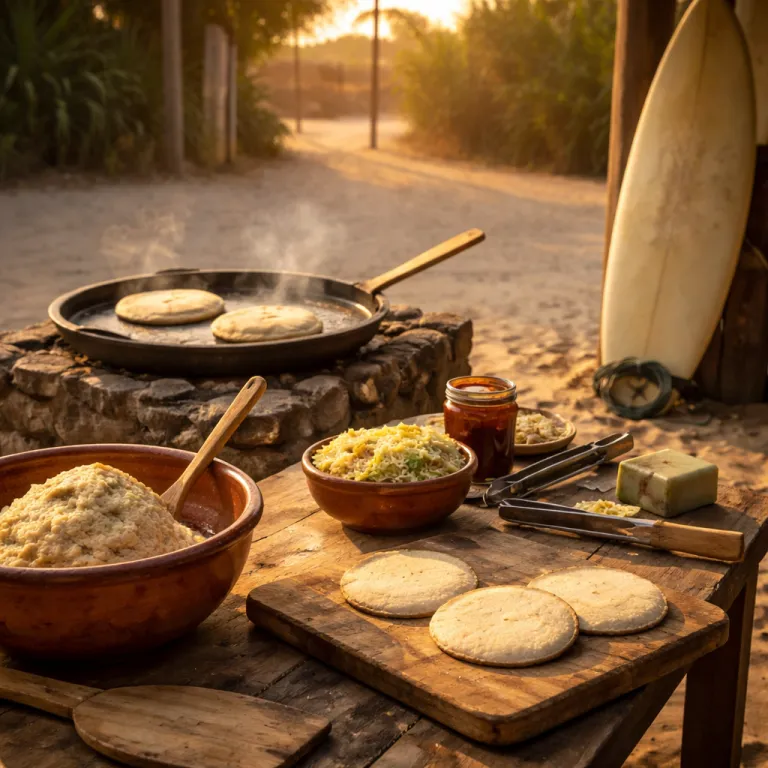
Why the best pupusas in El Salvador sit beyond the resort gate
Luxury travelers often assume their hotel already serves the best pupusas in El Salvador. Yet high end kitchens in El Salvador are engineered for consistency, safety and broad appeal, which means the food Salvador hotels plate can feel polished but strangely anonymous. When you step outside to a focused pupusería that lives and dies by a single pupusa stuffed with molten cheese and refried beans, you finally taste why pupusas are El Salvador's national dish.
In a large resort the executive chef must design menus para hundreds of guests, so the team optimizes for averages rather than the obsessive depth you find in a family run local restaurant. That structural reality explains why tortillas stuffed with cheese refried beans on a poolside menu rarely match the ricas pupusas you will find in a street side pupusería in San Miguel or Antiguo Cuscatlán. The best pupusas emerge where the same hands press corn tortillas all day, adjusting ingredients by instinct, not by spreadsheet.
On my last travel circuit between San Salvador and the eastern beaches, the most memorable meal was not a tasting menu but three dinner pupusas at a modest pupusería in San Miguel. This unpretentious restaurant, Pupusería La Única near Parque Guzmán, sits far from any luxury hotel, yet every pupusa stuffed with beans, cheese and chicharrón arrived blistered, fragrant and astonishingly delicious. When you compare that focused experience with a hotel’s all day lunch dinner outlet, you understand why pupusas Salvador culture thrives outside the lobby.
There is also a price reality that matters, even for premium guests who could easily charge another tasting menu to the room. In typical pupuserías across El Salvador, a single pupusa often costs around 0.50 to 1.00 USD, which makes a full meal of four or five pupusas tasty cheap compared with a resort entrée that can exceed 25 USD. That price gap is not about quality; it reflects lower overheads and a different business model, where volume and loyalty replace margin and marketing.
Local tourism board summaries describe pupuserías as one of the most common registered food businesses in greater San Salvador, which means you can usually find pupusas within a short ride of almost any luxury property. For a solo traveler, that density turns every neighborhood into a soft cultural hotspot, where the things you eat become a map of the city rather than a room service line item. The best pupusa you will remember from your trip is unlikely to come from a laminated menu in English, and that is precisely the point.
Let your surf instructor lead you to the real food Salvador locals eat
On the Pacific coast, the most reliable concierge for food Salvador culture is not always the front desk but the surf instructor waxing boards at dawn. These are the people who finish a session ravenous and head straight to the same pupusería every morning, which means they know exactly where the best pupusas in El Salvador are within a ten minute drive. When you ask them for a place where the pupusas will be hot, fast and genuinely local, you tap into a parallel hospitality network that rarely appears on glossy hotel maps.
Approach the conversation with respect and curiosity rather than a checklist of things to eat, and you will usually get more than one recommendation. A simple line works well; “Where do you go for ricas pupusas after a late night session, not the tourist restaurant but your spot?” That phrasing signals you want the same meal they trust, not a sanitized version para visitors, and it often leads to an invitation to join the crew for lunch dinner after the next swell.
On the surf coasts that recently handled a massive influx of visitors during Holy Week, luxury operators learned that guests who ventured out for dinner pupusas came back more loyal to the hotel. As reported in a 2023 analysis of how surf coast luxury operators handled peak season, properties around El Tunco and El Zonte that embraced local food circuits rather than competing with them saw stronger repeat bookings. When your team confidently says “the best pupusa near here is at Pupusería y Restaurante Doña Marta in El Zonte, tell her we sent you”, you turn a simple meal into a branded experience.
There is a subtle etiquette to follow once you reach that recommended local restaurant, and it starts with ordering modestly. Begin with two or three pupusas Salvador style, perhaps one with cheese and beans, one with revuelta and one with loroco, then add more if you are still hungry. This respects the kitchen’s rhythm during busy periods and lets you calibrate how spicy the curtido and salsa actually are before committing to a full meal.
Time your visit for when locals eat, not when your jet lag suggests, because the griddles are hottest and the ingredients freshest between 18.30 and 21.00. Arrive later if you want a quieter experience, but remember that some spots close once the masa runs out, so late night cravings can be risky. If you plan to return another evening, a brief word of thanks and a promise to come back para más ricas pupusas goes a long way toward building a warm, familiar rapport.
From Olocuilta to Suchitoto: mapping a week of cultural hotspots through pupusas
A thoughtful luxury itinerary in El Salvador can weave high end stays with humble pupuserías, turning each city into a layered cultural hotspot. Start near the airport at the Pupusódromo in Olocuilta, a dedicated strip of pupusa stalls along the main road through town, where a dense row of stands lets you compare tortillas stuffed with different ingredients in a single stop, from classic cheese and beans to more experimental fillings. This is where you feel how a single pupusa stuffed with refried beans can vary wildly in texture and flavor from one stand to the next.
From there, head toward San Salvador and base yourself in a refined property that understands its role as a launchpad rather than a cocoon. Use the afternoon to visit a curated selection of pupuserías in Antiguo Cuscatlán, such as Pupusería La Ceiba or Pupusería La Única, where you can find pupusas that balance tradition with lighter, almost contemporary touches. A short ride further east brings you to San Miguel, where a cluster of long standing pupuserías anchors an emerging food Salvador scene that still feels refreshingly unpolished.
Midweek, trade the capital’s energy for the cobbled calm of Suchitoto, staying in one of the town’s restored colonial houses featured in this guide to refined stays in a lakeside colonial town. Here, the best pupusas in El Salvador are often served from tiny doorfront griddles, where corn tortillas puff beside pots of cheese refried beans while church bells mark the hour. Order a simple trio for lunch dinner, sit on the low wall facing the plaza and let the meal become part of the town’s slow theatre.
On the coast, consider a night or two along Costa del Sol, where upscale villas now coexist with long standing seafood shacks. Use a trusted driver or your hotel’s contact to reach a nearby pupusería that locals favor after work, then return to your suite for a nightcap by the pool. For more detail on where to base yourself, the guide to refined stays along the Salvador coast outlines properties that pair well with this kind of roaming, food led experience.
Across this week, aim for a simple pattern that respects both comfort and curiosity. Plan for three dinners in your hotel’s signature restaurant, three evenings dedicated to ricas pupusas in different neighborhoods and one splurge night at a contemporary fine dining restaurant where chefs reinterpret corn and cocoa in ways that deliberately stand apart from the pupusería tradition. That balance keeps you grounded in the everyday flavors that define pupusas Salvador culture while still enjoying the full spectrum of the country’s culinary ambition.
When the hotel restaurant still matters: structure, safety and a final argument
Arguing that every luxury traveler should chase the best pupusas in El Salvador does not mean hotel restaurants are obsolete. There are nights when the controlled environment of a polished dining room is the right choice, especially after a long flight, in heavy rain or when you simply want a quiet, linen clad meal. On those evenings, let the kitchen shine at what it does best rather than forcing it to imitate a street side pupusería it can never quite match.
Use the hotel for what independent pupuserías cannot easily provide; a carefully paced tasting menu, a deep wine list and the calm assurance that every ingredient has passed rigorous safety checks. This is where you might explore modern interpretations of corn that nod to pupusas without copying them, or a dessert that plays with cocoa in a way that feels aligned with the country’s recent fine dining festivals celebrating innovation. In that context, ordering a token pupusa can feel like a gimmick, while leaning into the restaurant’s strengths respects both traditions.
There are also practical considerations for solo travelers who may not want to navigate unfamiliar streets late at night, even in generally safe areas. On nights when your energy is low or the weather turns, staying in for dinner pupusas or another comforting meal is not a failure of curiosity but a smart reading of circumstances. The point is not to romanticize every local restaurant visit but to choose consciously when to roam and when to retreat.
Over a full week, a balanced pattern emerges almost naturally if you pay attention to your own rhythms. Early in the trip, when jet lag and logistics dominate, lean on the hotel for structured meals and use lunchtime excursions to find pupusas in nearby neighborhoods. As your confidence grows, push one or two evenings further afield, using trusted contacts to reach places like the Pupusódromo in Olocuilta or a recommended spot in San Miguel.
By the time you leave El Salvador, the meals that linger will likely be a mix; a perfectly executed hotel breakfast, a stormy night room service tray and a handful of ricas pupusas eaten standing at a plastic table while traffic hums past. That spectrum is the real luxury on offer here, not just thread counts or infinity pools but the freedom to move between polished spaces and the everyday life of the country. A thick corn tortilla stuffed with beans and cheese can carry as much memory as any tasting menu, if you give it the chance.
Key figures behind El Salvador’s pupusa culture
- Pupusas are officially recognized as El Salvador's national dish, and UNESCO has included Salvadoran pupusas and related practices in its Intangible Cultural Heritage lists, underscoring their cultural weight beyond simple street food.
- National tourism reports from the Ministerio de Turismo de El Salvador (for example, 2022 summaries on registered food businesses) consistently highlight pupuserías as a cornerstone of everyday dining, which means luxury travelers can usually access authentic pupusas within a short drive of most premium hotels.
- Price monitoring by local food writers and travel guides in 2022–2023 indicates that the average cost of a pupusa in everyday pupuserías is often around 0.50 USD, compared with hotel main courses that frequently exceed 20 USD, making pupuserías an exceptional value even for high end guests.
- Typical pupusería pricing of roughly 0.50 to 1.00 USD per pupusa allows a filling meal of four or five tortillas stuffed with cheese and beans for under 5 USD, far below the cost of a single resort entrée.
- During peak holiday periods, such as Holy Week when large numbers of visitors arrive, coastal luxury operators interviewed in 2023 reported that guests who venture out for local meals return with higher satisfaction scores, reinforcing the strategic value of integrating pupuserías into curated itineraries.
References
- UNESCO – Intangible Cultural Heritage lists and information on traditional foods, including Salvadoran pupusas and associated culinary practices (consulted 2023).
- El Salvador local tourism board – public reports from the Ministerio de Turismo on registered food establishments, visitor flows and the role of pupuserías in national gastronomy (2022–2023).
- Salvadorenanfood.com – reporting on gastronomic tourism, typical price ranges in El Salvador and the positioning of pupusas within everyday dining, including 2022–2023 market snapshots.